
For hotels, housing providers or organisations seeking confirmation before taking action, our team can assess your situation and recommend the most appropriate next steps.
A faster, more accurate way to locate live bed bugs — often before visual signs appear.
The Method
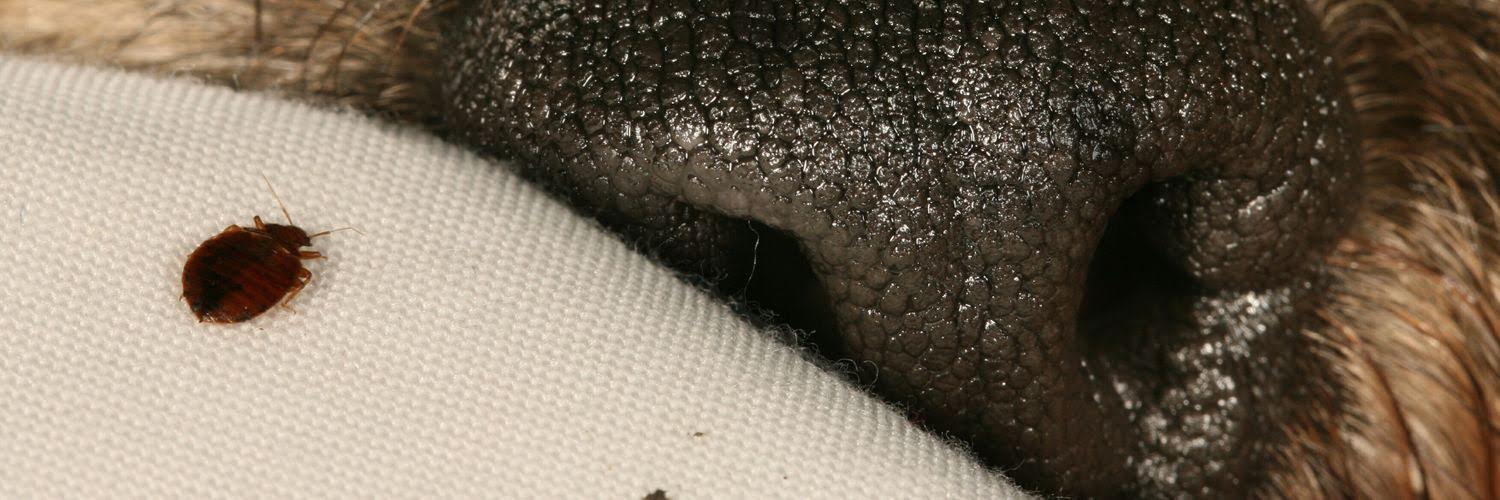
Bed bugs are experts at hiding. They squeeze into tiny gaps, remain unseen for long periods, and often evade even thorough visual inspections. Canine detection addresses this challenge by using a dog’s natural scenting ability — far more precise than any tool, trap or human inspection.
Dogs can identify the unique scent associated with live bed bugs, even when they are hidden inside furniture, deep within fabrics, behind headboards or along electrical fittings. This makes canine detection one of the most effective early identification methods available.
Unlike visual checks, which rely on spotting physical signs such as droppings, cast skins, eggs or live insects, canine detection focuses on locating the source of the infestation rather than the aftermath. This provides faster answers, earlier confirmation and more accurate targeting for any required treatment.
With professional training, structured search patterns and ongoing maintenance training, detection dogs provide:
Canine detection is not simply an alternative method. It is a modern, evidence led approach that improves confidence, reduces unnecessary treatments and supports more effective eradication plans.
accuracy prevents wasted action
Our detection teams are trained to locate bed bugs in mattresses, skirting boards, bedding, furniture, luggage, sockets, headboards and other areas they commonly hide.
By identifying infestations early, you can contain the problem quickly and target treatment effectively, saving time, cost and disruption.
Our Approach
We use structured search patterns, handler and dog teamwork, and welfare focused training methods to deliver dependable results.
Our approach removes uncertainty, reduces the need for invasive inspections and ensures that treatment decisions are based on accurate, verified findings rather than assumptions.
For hotels, housing providers or organisations seeking confirmation before taking action, our team can assess your situation and recommend the most appropriate next steps.
Detection dogs are trained to identify the scent of live bed bugs and viable eggs. They do not alert to dead insects or old residue, which helps ensure alerts reflect current activity rather than past issues.
When properly trained and handled, detection dogs are highly accurate and effective at identifying low-level and early infestations. Ongoing training and regular evaluation help maintain reliable performance across different environments.
No. Inspections are non-invasive and do not require dismantling furniture, removing walls, or vacating rooms. This makes canine detection especially well suited for homes, hotels, apartments, and occupied buildings.
Yes. Canine inspections are commonly used to verify whether live bed bug activity remains after treatment. This allows for targeted follow-up rather than unnecessary repeat applications.
Detection dogs can inspect bedrooms, living spaces, furniture, hotel rooms, multi-unit buildings, and other areas where bed bugs may be present. Large or complex properties can often be inspected more efficiently than with visual methods alone.
No. Canine detection is a diagnostic tool, not a treatment. Its purpose is to confirm presence and guide next steps so that any treatment applied is appropriate and targeted.

Specialist canine detection services delivering accurate, non-invasive solutions across the UK.
© CAPE SPC 2026. All rights reserved.